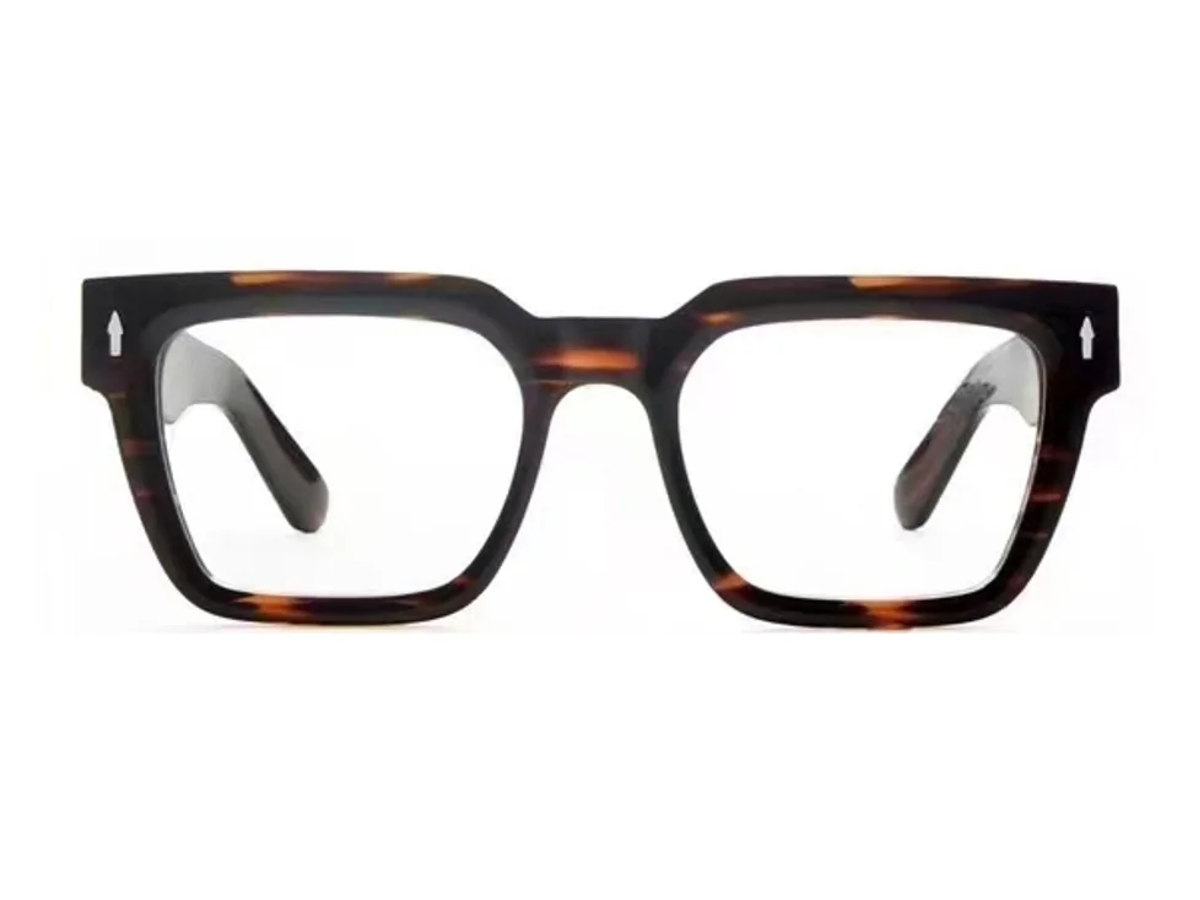
Acetate glasses frames are commonly made from shaped cellulose acetate sheet. The front and temples can display color and pattern through the material itself, rather than relying only on a coating. But “acetate” does not identify a particular sheet supplier, formulation, hinge or finished-frame performance.
For a wholesale buyer, the useful questions are which frame parts are acetate, how the color is specified, and what the approved sample must show. The image above is our catalog model 23049, not an illustration of every acetate construction.
What is cellulose acetate?
Mazzucchelli’s materials guide describes cellulose acetate as a modified cellulose-based polymer made into sheets with different formulations and visual effects. This is a material-maker’s description of its own process; it does not establish the sheet maker or formulation used in an individual frame offered by Titanium Frames.
Acetate belongs to the broader family of plastics. In eyewear sourcing, however, a sheet-acetate frame is not interchangeable with an injection-molded frame just because both contain polymer. Eastman’s eyewear materials page documents several material routes used for frames. Ask a supplier to name the material and production route for the proposed model.
How does sheet acetate become a frame?
A typical sheet-based design starts with a material and color reference, then defines the front and temple shapes. The parts are cut and shaped, finished, and assembled with hardware. That sequence is a general design framework, not a statement that every factory or model follows an identical process.
For a closer look at the decisions behind those stages, see how sheet-acetate frames are made. The process guide focuses on material approval, geometry, hardware, finishing and inspection rather than repeating the material comparison here.
The decisions visible in a sample include rim thickness, bridge shape, lens opening, temple profile, edge rounding and surface finish. A color name alone does not resolve these details. A transparent front, for example, can reveal a temple core or hinge area more clearly than an opaque design. Specify what should be visible before approving the sample.
For a mixed construction, request a component list. An acetate front with metal temples should not be represented as an all-acetate frame. Our mixed-material frame guide explains how to describe those combinations without obscuring their components.
What makes acetate useful for a collection?
The strongest reason to consider sheet acetate is usually its appearance. A buyer can compare solid colors, translucent effects and multi-color patterns as part of the design brief. Mazzucchelli documents multiple ways of creating colors and patterns in sheet material, but that supplier catalog is not a promise that every effect is available for a particular model or order quantity.
The front profile can also be an important design choice. Rather than calling an acetate frame “better” or “heavier,” compare actual sample dimensions and complete-frame weight. A narrow acetate frame and a broad, thick acetate frame should not be treated as the same wearing experience.
Material choice does not settle fit or durability by itself. Hinges, fasteners, lenses and assembly need their own checks. If you need a claim about skin contact, strength or a specific finish, request the relevant finished-product evidence rather than borrowing a property from a raw-material sheet.
What should a wholesale buyer confirm?
Record the sheet source, not just the material name
Ask for the sheet maker and the formulation or product reference proposed for the front and temples. Keep those details separate from the finished-frame manufacturer. A claim such as “Italian acetate” does not identify a particular maker, and a maker’s name alone does not identify the sheet used for your order.
For a named-material requirement, request records that connect the material reference to the selected model and order. These might include supplier documentation and a lot or batch reference, depending on what is available. Agree what evidence the supplier will provide before you make a named-material claim in your own listing. Nothing in this guide establishes that our catalog frames use Mazzucchelli material.
Approve color, pattern and finished thickness separately
Keep the sheet color code with a physical swatch or other approved reference. For patterned material, agree which features must remain consistent and what placement variation is acceptable across the front and temples. A swatch helps define the material appearance; the assembled sample shows how the chosen cutting direction and frame shape present it.
Also distinguish raw sheet thickness from the finished rim, bridge or temple thickness. Mark the finished measurement points on a drawing rather than describing the whole product with one thickness number. Request a sample if the edge profile or layered appearance matters to the design.
Keep the approved material, color reference, batch information where supplied and sample version in one purchase record. Ask for notice before a material or color substitution, and define when a new swatch or complete sample must be approved. A repeat model number does not by itself confirm an unchanged sheet specification.
For an existing style, request the model reference, available sizes, color codes, current photos and a complete sample. Check the front, both temples and hinge movement—not only the product-card image. Ask whether the frame shown is current stock, a catalog reference or a style that requires new production.
For private label, mark the logo position, method and desired visibility on the actual frame. Packaging is a separate requirement. For a new design, send a reference image, sketch or sample and identify which aspects should change. You do not need to claim a finished technical drawing before asking whether a project is feasible.
Keep quantity questions model-specific. A starting MOQ does not automatically apply to every color, size, new pattern or custom component. Our eyewear MOQ guide explains the difference between a model minimum and a color or customization minimum.
A sample-review checklist
For a model-level size reference, GGF6001BJZ has catalog dimensions of 49-21-148 mm, with a listed lens height of 45 mm. Use these measurements to compare a candidate frame with your brief; they do not establish its weight, fit or stock availability.
- Confirm the named material for the front, temples and other visible parts.
- Match color codes to a physical or approved digital reference; note any pattern-placement tolerance.
- Check front profile, lens opening, bridge, temple length and overall fit against the requested size.
- Inspect edges, hinge operation, alignment and surface condition on the assembled sample.
- Record what logo, packaging and variant changes are included in the quotation.
- Ask which details require a new sample before a larger order.
These checks do not substitute for an agreed technical test plan. They make the purchasing brief specific enough to compare offers.
Frequently asked questions
Is acetate the same as generic plastic?
Acetate is a plastic material, but “plastic frame” is broader. Ask whether the offer is sheet cellulose acetate, an injected resin or a mix of materials. Our plastic-frame supplier guide covers some other material labels used in the market.
Are all acetate frames made from the same sheet?
No. Formulations, suppliers, colors and sheet constructions vary. Request the specification for the selected model; do not assume a material maker featured in a general article supplies that frame.
Can an existing acetate style be private-labeled?
That depends on the style and the requested change. The safest starting point is to identify a model, logo position, quantity and packaging request, then ask for a project-specific quotation.
Browse our acetate eyeglass frame category for current catalog references. If you already have a frame photo or target quantity, send it for review; a drawing is helpful when available but not required for an initial inquiry.