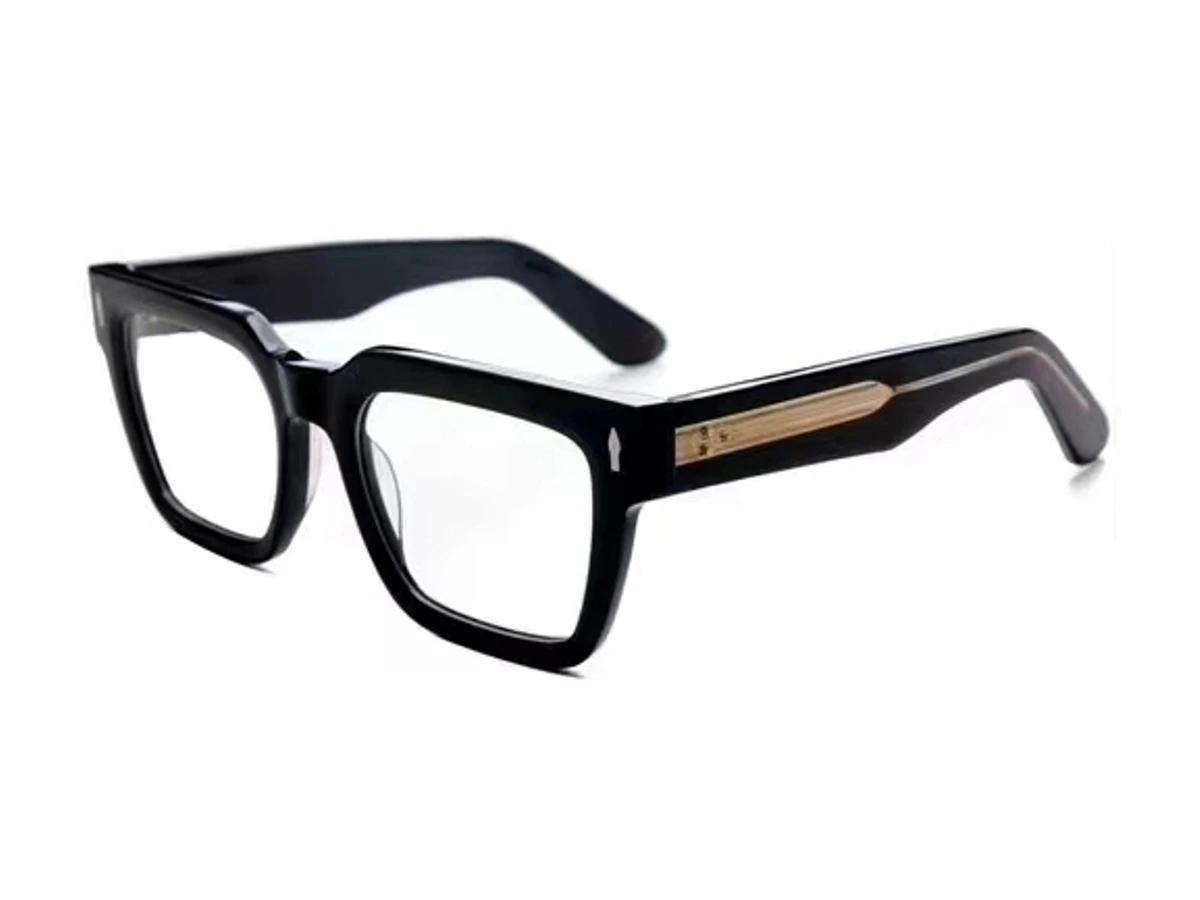
Making a sheet-acetate eyeglass frame involves choosing the sheet, shaping the front and temples, fitting hardware, finishing the surfaces, and assembling and inspecting the frame. The steps and their order depend on the design. This guide covers the sheet-based route. It does not suggest that every plastic frame is cut from sheet or that every factory uses the same equipment.
The product pictured above is our finished catalog model 23049. Its image shows what a buyer can review on an assembled frame; it does not document the machinery or production route used for that model. If you first need to compare materials, start with our acetate frame material guide.
1. Select the sheet and approve the visible result
Cellulose acetate can be supplied in different colors, patterns and sheet constructions. Material producer Mazzucchelli describes several ways of making decorative sheets and explains that sheet condition and the placement of layers can affect later processing. Its guidance is about its materials; it does not identify the sheet supplier for any model on this site.
A color name alone is not enough for an order. Record the material description, sheet or color code if available, approved visual reference, and acceptable variation between frames. For a translucent or layered design, agree on how the pattern should appear on the finished front and temples. Ask whether the proposed color is available for an existing style or requires new material and a sample.
2. Cut and shape the front and temples
The sheet is prepared as workable blanks. The front and temples are then cut or machined to the required outlines and component interfaces. In EIDAI Optical’s published acetate process, CNC machining establishes the front and temple geometry before hardware fitting and finishing. Mazzucchelli’s processing guidance also discusses sheet cutting and milling, including how sheet structure can affect the cut. These examples do not describe the equipment used by every supplier.
An approved drawing should define the lens opening, bridge, front width, temple profile, hinge location and any geometry that affects fit. The buyer should ask which dimensions will be measured on the machined part and which will be checked after finishing and adjustment. A smooth-looking outline cannot prove that the lens seat, left-right symmetry or hinge positions match the approved design.
3. Fit hinges and other structural components
An acetate front is only part of the frame. Hinges connect it to the temples; some temple designs also use a metal core or other internal component. EIDAI’s process description identifies hinge insertion and core-wire work as separate operations in its own acetate route. Do not assume that every temple contains the same core, or that a hinge seen in a photograph has a particular insertion method.
Specify the approved hinge and temple construction when those details matter to the order. On the sample, check that both temples open consistently, the hardware sits as intended, and the front and temples align. If a supplier changes a hinge, core or attachment method after sample approval, treat it as a design change rather than an invisible substitute.
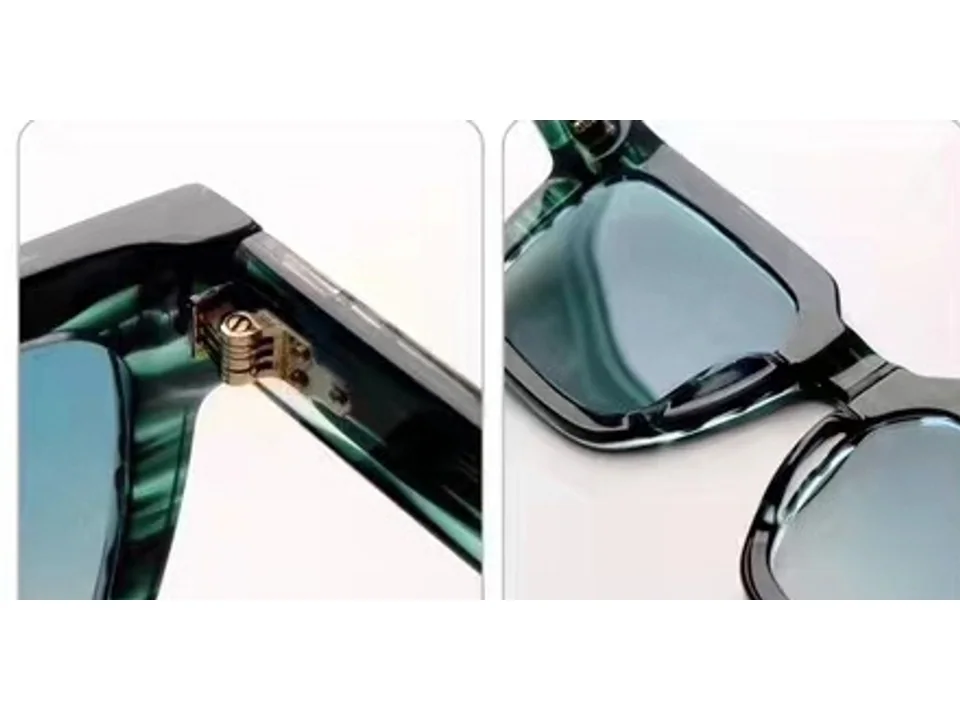
These are finished-frame detail views of model 23049, not photographs of its manufacturing steps. Ask for the component specification and an approved sample before describing its hinge construction in a purchase order.
4. Finish, assemble and adjust the frame
Machining shapes the parts; finishing and adjustment affect how the assembled frame looks and feels. The production route can include edge work, polishing, fitting, assembly and adjustment. Marcolin’s account of its eyewear production separates material, manufacturing, finishing and final adjustment; EIDAI likewise describes polishing, fitting and inspection after machining and structural work. Those companies describe their own operations, not Titanium Frames’ equipment or a promised process for model 23049.
Review the finished sample under agreed viewing conditions. Check the front and temple surfaces, edges near the bridge and lens opening, alignment, hinge movement and visible color. A glossy catalog image will not show every edge or contact point. If one finish is approved and another is quoted, record the change and request a sample when needed.
5. Inspect against the approved specification
Compare the completed frame with its approved sample and written requirements. For a sheet-acetate design, checkpoints may include material and color identification, dimensions, lens fit, hinge operation, front-temple alignment, surface condition and packaging. Select the checks for the product and target market. A general checklist cannot replace a product-specific test plan.
- Sheet choice: identify the material and color reference, acceptable pattern variation, and approved sample.
- Shaping: identify the controlled drawing revision and measurements to check on the finished frame.
- Hardware: record the hinge and temple construction, then compare them with the assembled sample.
- Finish: approve the surface and edge condition using a finished sample or agreed limit reference.
- Release: confirm quantity, variants, inspection criteria, and the written production decision.
Our separate eyeglass frame quality-control guide covers how to set inspection methods and acceptance rules. Before authorizing a new design for volume production, use the pre-production checklist to match the physical sample with the current drawing and order.
Does a wholesale buyer need to manage every step?
No. For an existing acetate style, start with the model, color, size, quantity, logo request and sample. Ask the supplier to confirm what is available and what would change the quote. You do not need to commission a new design to buy an existing frame.
For a new OEM/ODM frame, more decisions must be controlled: sheet direction, front and temple geometry, hardware, surface, branding and sample approval. The full eyeglass frame manufacturing guide maps those decisions from the first brief to shipment. It is a project framework, not an assertion that all acetate frames take an identical route.
To see how catalog specifications are presented, review acetate frame GGF6008BJZ. Its page documents dimensions and color examples; it does not confirm that this model follows every production step described in this general guide.
Frequently asked questions
Are acetate frames always cut from sheet?
No. This article covers the sheet-acetate route. Cellulose acetate can also be supplied in other forms, while other plastic frame materials may follow molding routes. Ask for the material and making method of the particular frame you are buying rather than inferring it from a broad “plastic” label.
Does polishing make a poorly shaped frame fit correctly?
No. Finishing changes the surface and edges, but the approved geometry, component positions and final adjustment still need their own checks. Review dimensions and fit on the finished sample, not only the appearance of a polished front.
Can I request a logo on an existing acetate frame?
Ask about the specific model, logo position and method, color, quantity and packaging. A supplier can then confirm whether the existing style supports the requested change and whether another sample is needed. Do not assume one customization option applies to every model.
To compare actual catalog styles, see our acetate frame category. If you have a reference photo or model number, send it with your quantity and target market for a project-specific review.