Sustainable eyewear claims need a defined scope. Ask what the statement covers: the front, temples, complete frame, lenses or packaging. Then request evidence for that specific statement and the product being ordered. A material name or green-looking package does not answer those questions.
This guide helps brands and wholesale buyers review supplier information before approving public copy. It is not a list of certified products or a claim that Titanium Frames offers a verified environmental range.
Start with the exact statement you want to use
Write the proposed claim beside the model and component it describes. Replace a broad request for an “eco frame” with questions the supplier can answer. Which material is proposed? What property is documented? Which parts and order does that evidence cover?
The US FTC’s Green Guides summary cautions against broad, unqualified terms such as “green” or “eco-friendly.” It calls for clear, specific qualifications. That is US guidance, not a complete rulebook for every market; have the final wording reviewed for its destination.
Avoid promising an overall environmental benefit from a single material attribute. Keep the evidence, scope and proposed wording together so the reviewer can see what is being claimed.
Separate recycled, renewable and end-of-life claims
These labels are not interchangeable. The FTC summary treats recycled content and renewable materials separately and warns that an unqualified renewable-material statement can imply other properties. Do not expand a material-origin statement into a claim about recycling or biodegradation.
For a recycled-content proposal, ask which component contains it, the stated proportion and calculation basis, and the records supporting that figure. For a bio-based or renewable-material proposal, ask for the material maker, formulation and the exact measure being reported. A percentage without a defined basis is hard to compare.
Mazzucchelli’s material guide describes its own cellulose acetate, formulations and processing. It does not establish the formulation or sheet source of a frame sold by another supplier. Nor does the word “acetate” alone identify a complete environmental specification. Our acetate material guide explains the model-level source records to request.
Treat disposal claims as a separate review
If a proposal says recyclable, compostable or biodegradable, ask for the specific claim, test basis and relevant disposal conditions. Have the responsible specialist check whether the statement fits the assembled product and the market where it will be sold.
Do not tell buyers to place a mixed-material frame in household recycling based only on one component’s material. Request an established collection or disposal route before publishing instructions.
Connect the documents to the model and order
Keep a record of the proposed material reference, supplier, component, color and sample revision. Ask which purchase or batch records connect the material documentation to the frames in your order. A raw-material brochure is useful background, but it does not identify what went into a particular shipment.
Review any difference between the material sample and the finished frame. The front, temple core, hinges, pads and coatings may have separate specifications. Do not apply a claim for one part to the whole assembly without support for that broader scope.
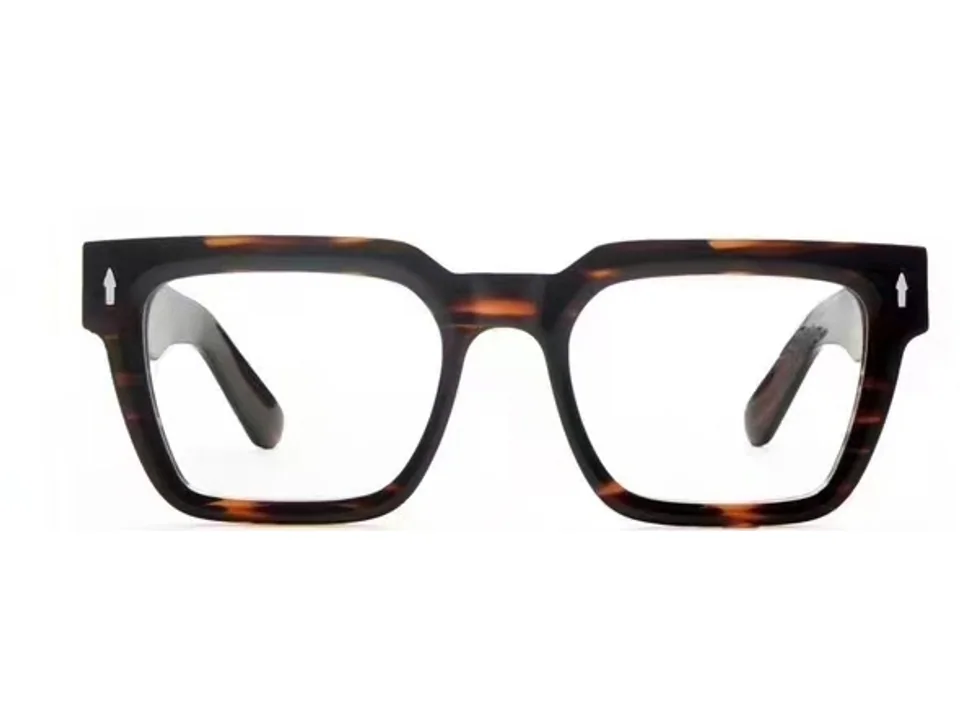
The catalog photograph below illustrates that distinction. It provides a product reference, not evidence of environmental attributes.
Check what a certificate actually covers
Identify the scheme, issuing body, certificate holder, validity and covered activities or products. Ask how the certificate relates to the selected material and shipment. Verify unclear records through the scheme or issuer’s official route rather than relying on a cropped badge.
Textile Exchange’s chain-of-custody explanation distinguishes scope certificates from transaction certificates within its system. This illustrates why a company’s certification scope and evidence for a shipment answer different questions. It does not mean every eyewear material is eligible for that system or that this website is certified.
Have a qualified reviewer check the applicable scheme and permissions before using a logo or certification statement. Do not recreate a seal or assume the material supplier’s mark can be printed on your own packaging.
Keep packaging and service information separate
A documented claim about a case or carton should name that item. It should not become a recycled-frame claim. Request the packaging material, supplied version and evidence independently from the frame specification.
Repair and spare-part arrangements can also be useful purchasing information. Ask which components can be replaced, who performs the work and what parts can be ordered. Do not turn a proposed service arrangement into a guaranteed lifespan or quantified waste reduction.
For care instructions, use the actual frame and lens configuration. The care leaflet checklist covers that approval process without assuming every material accepts the same cleaning method.
Approve claims alongside the purchase specification
Before ordering, record:
- The model and component covered by each proposed statement.
- The exact material or packaging reference.
- The documents provided and any gaps still open.
- Who will review the evidence and public wording.
- Which substitutions require another review.
If the evidence is incomplete, remove or narrow the public claim. Keep the ordinary product specification clear rather than filling a documentation gap with “sustainable.” Use our quotation checklist to make sure competing offers cover the same requirements.
Frequently asked questions
Does bio-based mean biodegradable?
Do not infer one from the other. Ask for the exact formulation, claimed property, evidence and conditions. Renewable origin does not supply a finished-product disposal instruction.
Does a certified supplier prove my frame is certified?
Not by itself. Check the scheme’s scope, the selected product and the records required for your order and intended claim.
Can we request an environmental material option without a full specification?
Yes. State the property and evidence you need, along with a frame reference, quantity and destination. Availability and supporting documentation still need confirmation before approval.
Send your frame brief and evidence requirements for review. This guide is not a promise that a requested recycled, bio-based or certified option is available; those details must be confirmed for the project.