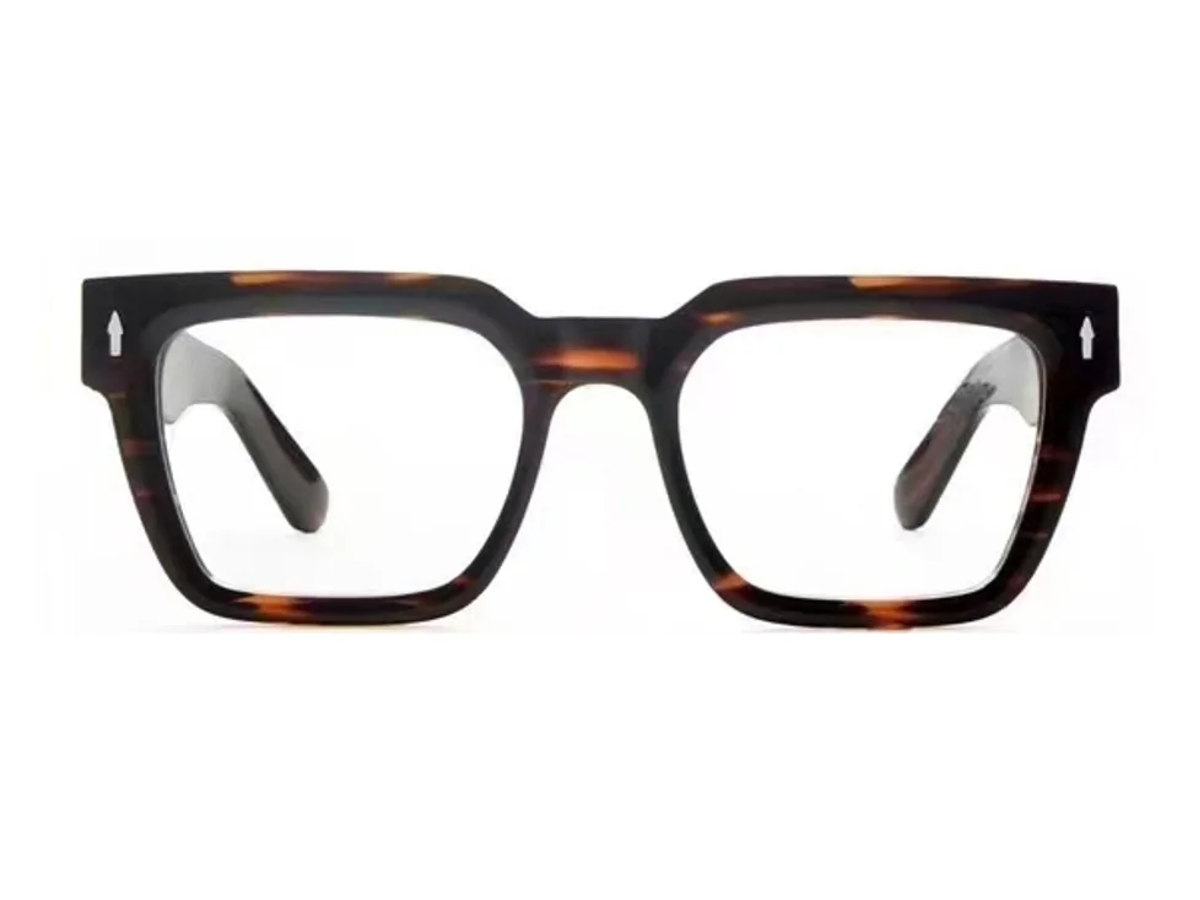
Eyeglass frame care instructions should match the frame that will actually reach the buyer: its materials, finish, hardware and fitted lenses. For a private-label order, agree this information before approving the packaging. A generic cleaning leaflet copied from another collection may not cover your product.
This guide is a purchasing checklist for brands, wholesalers and optical retailers. It is not a universal cleaning formula or a substitute for the selected frame and lens manufacturers’ instructions.
Separate frame care from lens care
A frame supplier may deliver unglazed frames or frames with demonstration lenses. The optical lab or retailer may later fit prescription lenses with a different material or coating. Confirm the supplied configuration rather than treating the demonstration lenses as the final product.
Ask who will approve the instructions for the finished eyewear. If a lab fits the lenses, it should check that the proposed cleaning advice is compatible with those lenses and coatings. The frame supplier should confirm the advice for the frame, including trims, nose pads and any surface treatment.
ZEISS’s public care guide discusses lens cleaning and frame cleaning separately, as well as storage and handling. It is useful context, but not approval of a cleaner for every frame sold by another manufacturer.
Get care information for the exact model
Request a written care reference with the model number and relevant variants. It should answer these questions:
- Which materials and finishes does it cover?
- Which cleaning products and methods are approved, and what should be avoided?
- Does the method apply to the complete assembled frame, including decorative parts and attachments?
- Are there special limits for a particular color, finish or component?
- Which adjustments or repairs require an optical professional or an authorized service provider?
- Who should the retailer contact if a finish or component changes?
Do not turn an unanswered question into a reassuring claim. “Suitable for all frames” and “maintenance-free” need evidence for the scope promised. The screwless frame guide explains why a hinge label alone does not establish its service needs.
Avoid a universal chemical recipe
Do not approve a household cleaner, alcohol wipe, solvent or disinfectant just because an online guide recommends it. Ask about the exact product and the whole frame-and-lens assembly. Cleaning and disinfection are different tasks; a routine care leaflet should not promise a disinfection result without appropriate support.
Likewise, obtain model-specific guidance before recommending ultrasonic cleaning, soaking, heat or bending. Advice for one material or unfinished component is not automatically suitable for a coated, glued or assembled frame. If a method has not been confirmed, leave it out and direct the user to the retailer for advice.
Keep the customer leaflet short
The supplier’s technical notes and the leaflet packed with each frame serve different readers. Keep the full supporting record internally. Turn only the approved instructions into short, usable customer copy.
A practical leaflet can contain four blocks:
- Cleaning: the confirmed method, suitable cleaning materials and any restrictions.
- Handling and storage: how to put the frame away and protect it from damage, following the supplier’s guidance.
- Adjustment and repair: when to stop using a damaged frame and where to seek help; do not instruct customers to force a joint back into place.
- Support: the retail brand’s contact route and a model reference that helps identify the product.
Use direct sentences rather than broad promises about scratch resistance, lifespan or skin comfort. If you sell into several markets, have the final language reviewed for clarity and any applicable local requirements. This checklist does not establish that a particular leaflet meets those requirements.
Approve the case and cloth alongside the leaflet
Check the proposed case with the actual frame, folded as instructed. Confirm that it closes without pressing on the frame or lenses. Include the supplied accessories in the packaging sample rather than relying on their nominal dimensions.
If a cloth or cleaning product is included, confirm its specification, instructions and compatibility. Do not bundle a cleaner whose suitability is still unknown. Keep the supplier’s identification and supporting information with the packaging approval.
For a first order, separate the frame, logo, case, cloth and printed insert in the quotation. Our private-label budget guide covers that purchasing sequence without assuming every packaging option is available for every model.
Keep instructions linked to the order version
Save the model, size, color, approved sample, leaflet revision and approval date together. Record who confirmed frame care and who confirmed care for the final lenses. The retailer should be able to identify which instructions belong to a delivered variant.
A later change to the finish, hinge, decorative attachment or supplied lens may require another review. Ask the supplier to identify proposed substitutions before shipment. Update the leaflet and online care page together when the approved advice changes.
Care instructions do not replace production acceptance checks or warranty terms. Keep those separate in the purchase record; our bulk-order sample checklist explains what an initial inspection can and cannot establish.
Frequently asked questions
Can one care leaflet cover acetate, metal and titanium frames?
Possibly, if the suppliers confirm that its advice covers all selected models and finishes. The material names alone are not enough. Use separate instructions where a variant needs different handling.
Can we use the frame supplier’s instructions after fitting prescription lenses?
Have the lens provider review them first. The final lenses and coatings may have care requirements not addressed by instructions for the original demonstration lenses.
Should the leaflet include home hinge repairs?
Only include procedures specifically approved for that model and intended user. Otherwise provide a service contact. A general repair kit is not evidence that the customer can safely service a particular connection.
What should we send with a private-label inquiry?
Send a frame reference, quantity, logo and proposed packaging needs. Ask what care documentation is available for the selected model. You do not need a complete technical drawing to start that conversation.
Browse our frame catalog or send your model and packaging request. We can review the request and confirm the available options and information for that project.