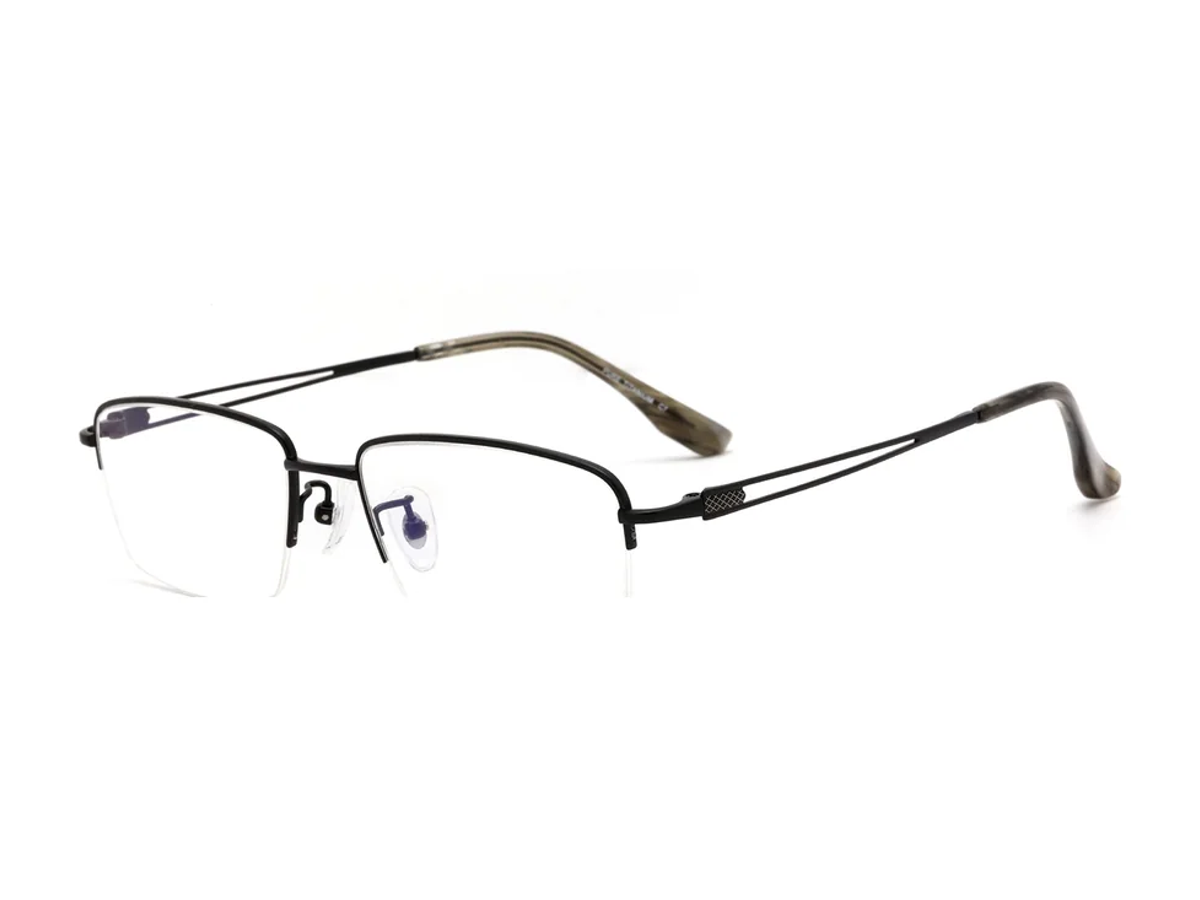
To compare eyewear manufacturer quotes, first confirm that suppliers are pricing the same frame, quantity, customization and delivery scope. Only then compare the unit price and the charges that sit outside it.
A quotation that says “titanium optical frame with logo” leaves several questions open. Which components are titanium? Which model and size? How many colors? Does the price include the case, sample work or transport? Until those details are aligned, the lowest figure is not necessarily the lowest cost for the order you actually need.
This Titanium Frames guide provides a proposed comparison method for wholesale, private-label and OEM buyers. It is not based on claimed customer savings, supplier rankings or undisclosed production data. Public trade-rule references are linked where used; the checklist is editorial procurement guidance.
Establish one reference order before comparing prices
Send every supplier the same request for quotation, or RFQ, with a version number or date. Identify the model or design reference, known specifications, quantity breakdown and delivery destination. Separate requirements from preferences so suppliers can label alternatives clearly.
Choose which order you want priced:
- Existing styles: the named catalog model, selected variants and current availability.
- Private label: an existing style with specified logo, color or packaging changes.
- OEM / ODM development: a design or concept requiring evaluation, samples and potentially separate development work.
Do not compare a ready-made style against a new design as if only the supplier’s margin differs. Ask each supplier to quote the requested route first and list any alternative separately. For the decisions that follow a new-design quote, see the eyeglass frame manufacturing process.
If you have not yet chosen whom to contact, start with our guide to finding an eyewear manufacturer in China. This article addresses the next decision: how to evaluate the replies.
Check the product behind the price
Material and component scope
Ask for the material description by relevant component: front, bridge, temples and connecting parts. If a grade or alloy is part of your requirement, request confirmation instead of assuming it from “titanium” or “metal.” Keep unconfirmed details visibly open in your comparison.
The same discipline applies to a stated frame weight. Ask what was weighed, which size and whether display lenses were included. Our 89547 titanium frame specification identifies its catalog measurements and the condition attached to its catalog weight. That is a model-specific reference, not a weight promise for a different frame.
Geometry, connections and appearance
Compare lens width, bridge width, temple length and the rim construction you requested. Identify hinge, nose-pad and temple-tip requirements where they matter to the order. A similar front-view photo is not enough to establish an identical product.
For a finish or logo, state the location, reference and approval method. Ask suppliers to identify the process they propose rather than treating a color name as a process specification. Record any substitution in a separate column.
Manufacturing perspective: split differences into three groups: product specification, development work and included services. This avoids explaining every price difference as “better quality” or “cheaper production.” A revised hinge or frame size belongs in the specification comparison; it is not simply another price for an unchanged frame. This is a way to analyze the quote, not a claim about any supplier’s internal costs.
Align quantity and color assumptions
Record both the total order quantity and the split by model, size and color. Ask whether the stated minimum applies to each model, each color or the combined order. If your planned assortment does not meet a quoted minimum, request a revised offer before using that price in a budget.
Keep initial-order and repeat-order assumptions separate. A volume price is useful only if you intend to purchase that volume and its conditions are clear. Do not spread development costs across future orders that have not been agreed.
For Titanium Frames, the confirmed starting point is 100 pairs per model and per color for qualifying styles and projects, with final MOQ subject to design, material and customization. It is not a blanket promise for every new design. Request the exact breakdown for your proposed order.
Separate unit price from one-time and optional charges
Ask each supplier to mark a charge as included, separately quoted, optional or not yet confirmed. A blank cell is not a zero.
Samples and development
Clarify what a sample charge covers, how many versions are included and what happens if the design changes. If any fee is credited against production, record the conditions. Do not assume a sample fee is refundable or a credit applies automatically.
If tooling is proposed, ask what the charge covers, who owns it, where it is held and which future changes would require a new quotation. These are points to agree, not rights that can be inferred from paying a line item.
Logo, packaging and inspection
Confirm whether the frame price includes logo application, a case, cloth, individual packing and any requested labels. List components rather than writing only “standard packaging.” Keep optional retail packaging separate from the base comparison.
Ask what inspection or testing is included, which specification it addresses and whether a separate provider is involved. Our eyeglass frame quality-control guide offers questions to discuss; it does not establish that testing is included in a particular quotation.
Compare delivery scope, not just shipping labels
ICC describes Incoterms® 2020 as rules allocating costs, risks and obligations between buyers and sellers. Record the agreed rule, the named place or port and the edition. ICC’s official questions and answers explain the importance of identifying these elements in the contract.
For quotation comparison, ask who pays each relevant transport, insurance, clearance and handling charge. Do not add freight twice if it is already included, or assume that a quote with a delivery label includes every cost at your destination. Confirm unresolved destination charges with the relevant logistics or customs specialist instead of inventing an allowance.
Keep payment terms and product acceptance conditions in their own fields. ICC Academy explains that the rules are not a substitute for a sales contract addressing payment and quality terms. This checklist does not recommend a particular trade rule for your shipment.
When you need a complete import budget rather than a quotation comparison, use the landed-cost worksheet for wholesale frames. It keeps destination charges and one-time costs visible without assuming a universal freight or tax rate.
Use a like-for-like quotation checklist
Create one copy of the following record for each supplier, using the same RFQ version. Attach the supplier’s reply rather than relying on a verbal summary. The table is a comparison framework, not a scoring system or evidence of supplier performance.
| Field | Record | Resolve before comparison |
|---|---|---|
| Product | Model or drawing version, dimensions and construction | Any different size, component or design assumption |
| Material | Specified materials for relevant frame parts | Broad labels and unconfirmed substitutions |
| Quantity | Pairs per model, size and color | Price based on a different assortment or volume |
| Development | Samples, revisions, tooling and any credit conditions | Whether each charge is included or separate |
| Extras | Logo, packaging, inspection and testing scope | Optional items mistaken for included items |
| Delivery | Rule, named place, edition and included transport costs | Destination costs or responsibilities left open |
| Timing | Sample and production estimates with starting conditions | Calendar versus working days; dispatch versus arrival |
| Commercial terms | Currency, payment schedule and quotation expiry | Expired offers or different payment assumptions |
For an internal budget, add the frame-order subtotal to applicable separate charges not already included. Keep confirmed amounts and estimates separate, convert currencies on a stated basis, and identify the delivery scope of the total. Do not present a partial total as a complete landed cost.
If you want a per-pair comparison, divide that clearly defined total by the same confirmed order quantity. Keep the one-time charges visible as well: the first-order figure does not automatically describe a repeat order.
A cheaper quote may need clarification, not rejection
Consider an illustrative scope mismatch, not a real supplier example: one reply includes cases and logo application, while another lists only unbranded frames. The second quote may still suit your project, but the two replies are not yet comparable.
Ask for the same logo and packaging scope, or ask both suppliers to quote frames only. If either supplier proposes a different material or construction, evaluate that as an alternative product before comparing its price. Do not silently accept the change to make the spreadsheet totals match.
The same approach works when lead times differ. Ask what starts the clock, what approvals remain and whether the date refers to completion, dispatch or arrival. Avoid turning a conditional estimate into a firm delivery promise in your own purchasing plan.
Send a focused clarification request
Use a short request tied to the original RFQ:
Please confirm your quotation against our RFQ version and the model/color quantity breakdown. Identify any specification differences, then list separately the charges for samples, development, logo application, packaging, testing and delivery that are not included in the unit price. Please also confirm the delivery basis, lead-time starting conditions, payment schedule and quotation validity.
Include the specific unanswered points from your comparison table. Once they are resolved, request an updated quotation that incorporates the answers. Keep that version with the approved specification and sample reference rather than assembling an order from disconnected messages.
- Use one blank reply record per supplier quotation; identify alternatives separately. These states describe comparison only, never order or sample approval.
- Buyer RFQ version: __________
- Supplier quote ID: __________; revision: __________; validity: __________
- Previous reply reference: __________; changed-line references: __________
- Separate alternative reference, if any: __________
- Comparison state (select one): requested scope confirmed / alternative for review / clarification required
- Exact unresolved question: __________; follow-up owner: __________
- Current reply reference: __________
Frequently asked questions
Is the lowest unit price the best offer?
Not enough information is provided by price alone. First establish the same product, quantity and included scope, then weigh the confirmed terms against your requirements. This checklist does not assume that either the cheapest or most expensive supplier is better.
Can I compare quotes without a finished technical drawing?
Yes, for an initial review. Provide the same model, photographs or design references and label open details. Ask suppliers to state their assumptions. Treat those replies as provisional where specifications still need development.
Should tooling be included in the price per pair?
You can allocate an agreed one-time charge across an order for budgeting, but retain it as a separate line in the comparison. Clarify ownership and reuse conditions independently, and do not assume the same charge or credit applies to later orders.
What should I do with an unspecified charge?
Mark it as not confirmed and ask who is responsible for it. Do not replace it with zero or a guessed industry average just to produce a complete-looking total.
Request a quote for a defined frame requirement
Compare the current titanium frame options or review our private-label and custom development options. Send the model or reference image, quantity breakdown, logo and packaging requirements, and destination. Include a target price if you have one; identify which requirements are fixed and which alternatives you would consider.
Request a quote using the information already available. You do not need to invent missing specifications before contacting us.