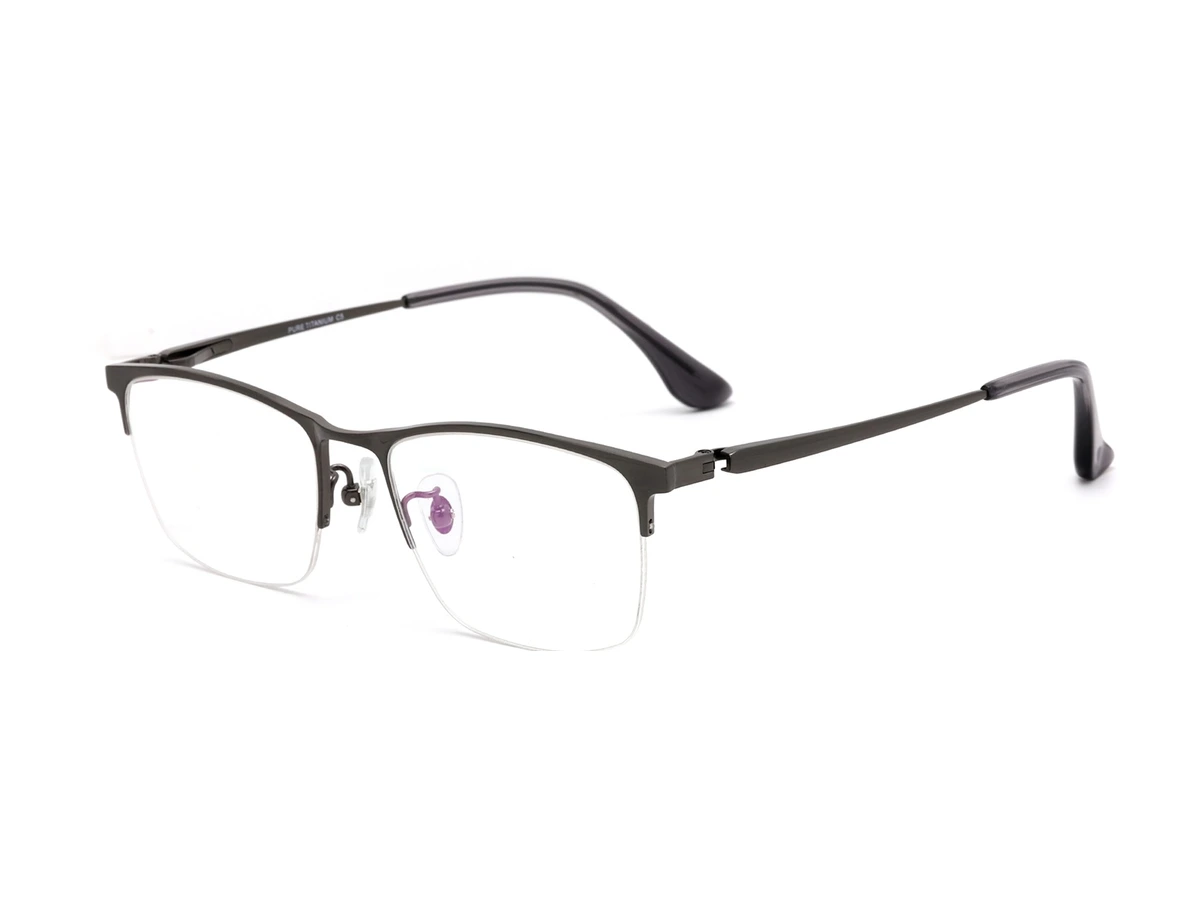
Common eyeglass nose pad types include screw-in, push-in, slide-on and adhesive pads. These names describe attachment. Silicone describes a material, while oval or D-shaped describes an outline. A frame may also have nose-contact surfaces formed into its front rather than separate pads. None of these descriptions alone identifies a replacement part.
For a wholesale or OEM order, start with the frame model and a clear view of the nose support. Then ask which component will be supplied. A request for complete frames needs different quantities and approval details from a request for loose replacement pads.
Identify the pad, holder and frame separately
A separate nose pad is the part that contacts the nose. Its holder and supporting arm are other components. For the surrounding terminology, use our guide to eyeglass frame parts.
Before choosing a pad, establish what the request concerns:
- An existing complete frame: identify the pad already specified for that model and color version.
- A proposed frame change: mark the nose-support area on a photo or drawing and explain what you want reviewed.
- A replacement part: provide the original component reference, if known, and images of both the pad and its connection.
Ask whether the support can be adjusted and whether the pad is intended to be removed. A separate pad does not automatically mean an adjustable arm. Likewise, a front material such as acetate or titanium does not identify the nose-pad assembly.
Compare nose pad attachment types
NosePads.com’s mounting tutorial distinguishes screw-in, push-in and slide-on connections. Adhesive pads attach to a suitable frame surface instead of one of those holders. Use the terms below to ask for identification, not as a guarantee that two suppliers’ parts will fit each other.
| Attachment | Connection to identify | Details to request |
|---|---|---|
| Screw-in / screw-on | A small screw retains the pad at its mount. | Pad reference, mounting tab and matching screw. |
| Push-in / push-on | A projecting connector engages a receiving holder. | Connector profile, dimensions and holder reference. |
| Slide-on / slide-in | The pad engages a matching sliding mount. | Mount drawing, orientation and intended assembly method. |
| Adhesive / stick-on | An adhesive backing contacts the frame surface. | Surface compatibility, footprint, thickness and care guidance. |
Some frames use a dedicated or proprietary arrangement. If a catalog name is unclear, request a back view of the pad and a drawing of the mating part. Do not assign a connection type from a distant front photo or force an unfamiliar part into a holder.
Record material without assuming performance
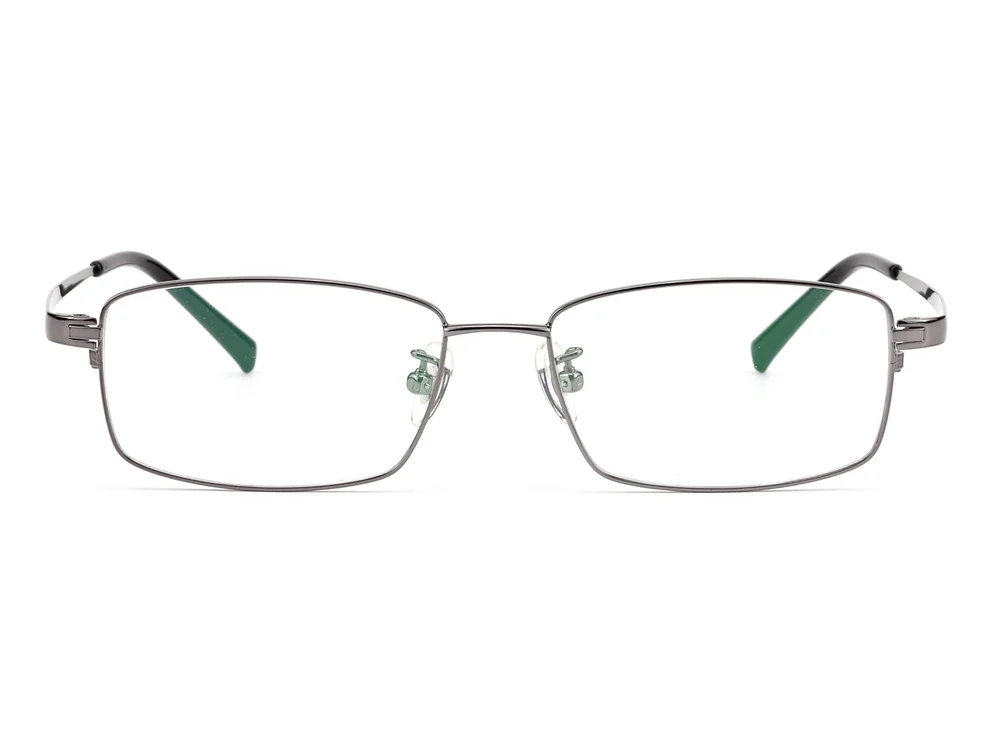
Material and mounting are separate choices. Hilco Vision’s Silicone Air Pads listing, for example, shows both push-on and screw-on versions. The silicone name does not select the connection. This is a public catalog example, not a claim that we supply Hilco parts.
NosePads.com’s material guide lists silicone, PVC and polycarbonate among nose-pad materials. It also describes parts with a contact layer over a different insert. When reviewing a proposed pad, ask for the material of the contact surface, any insert and the separate support hardware.
Use a sample to agree on color, transparency, surface texture and firmness where relevant. A clear appearance cannot distinguish silicone from another clear polymer. An air chamber is a construction detail, not a material specification or proof of a particular comfort result.
Keep claims such as hypoallergenic, medical grade or nickel-free out of the product brief unless there is evidence for the actual supplied assembly. Our nickel-free eyewear guide explains why the pad, insert, arm and finish need separate attention. Do not transfer a third-party supplier’s claims to your own collection.
Make the dimensions and photo views unambiguous
Ask for dimensions in millimeters and a drawing that shows where each measurement starts and ends. NosePads.com’s size guide notes that measurement conventions can differ for connected bridge designs. A size label is therefore a starting reference, not a complete drawing.
For an individual pad, request its length, width and thickness, plus the connector dimensions or a matching component reference. For a connected bridge pad, ask which overall dimension the listed size describes. Keep pad dimensions separate from the bridge number printed on a temple; our frame sizes guide covers those frame measurements.
Shape also needs an orientation. Supplier catalogs use names such as oval, round, teardrop and D-shaped. The NosePads.com shape guide illustrates mirrored left and right D-shaped pads. Ask whether the proposed part is handed, and label left and right from an agreed viewpoint. A matching outline alone does not establish a matching connector.
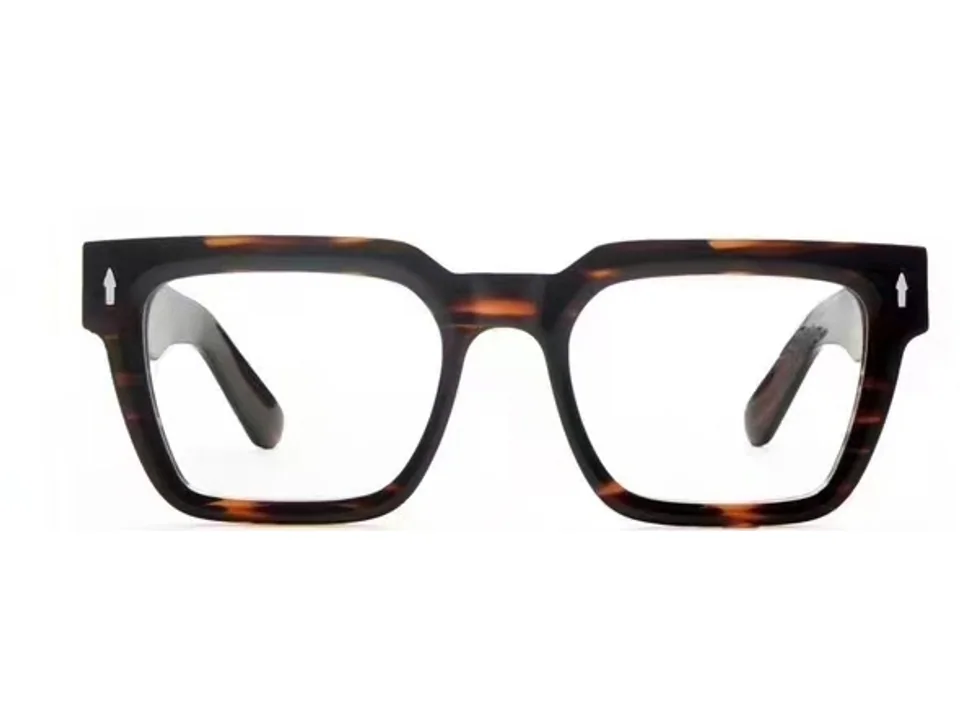
For useful reference photos, include the complete frame, the inside of the bridge and a side view of the support. Add a close-up of the connector if it can be shown without dismantling the frame. Mark the area you mean rather than asking the supplier to infer it from the frame’s overall size.
Check the pad on the assembled sample
Review the proposed pads on the frame that will be ordered. Record the supplied part references and compare the two sides with the approved sample. Note rough edges, visible damage, unexpected looseness, inconsistent color or a different support position for the supplier to investigate.
Ask a qualified optical professional to assess wearer fit and any permitted adjustment. Do not solve a fitting concern by prescribing a larger pad or a fixed arm offset in an email. Pad size is only one part of the frame-and-wearer relationship.
Where retention, movement or durability needs testing, agree on the method and acceptance limits for that assembly. A visual check does not establish a test result. Keep these requirements with the frame quality-control record, rather than applying an unrelated force or cycle count.
Also request care and service guidance for the approved part. Replacing pads, changing cleaners or altering the support should follow that guidance. The frame care guide explains how to keep customer instructions tied to the selected materials and construction.
Send a clear quote or reorder request
Use one short record that links the frame to the proposed component:
- Frame reference: model, size, color and approved sample or drawing version.
- Request scope: complete frames, a proposed pad change or separately supplied replacements.
- Part identity: pad reference, holder or arm reference and matching fastener where used.
- Open questions: missing material, dimensions, orientation or service information.
- Quantity and unit: complete frames, individual pads, matched pairs or packs.
- Change approval: who must approve a different component before supply.
For example: “Please confirm the nose-pad reference used on model X, color Y, sample revision Z. Are matching replacement pairs available separately? If so, quote the pack quantity and order terms. Please identify any proposed substitute before we approve it.”
This is a request format, not a promise of spare-parts stock. Confirm availability, minimum quantities and lead time for the requested item. A complete-frame quote does not automatically include spare pads, and the frame’s order terms need not apply to loose components.
Frequently asked questions
Which nose pad material is best?
There is no single best choice for every frame and wearer. Confirm the connection, dimensions and specified material, then review the assembled sample. A material name alone cannot guarantee comfort, grip or skin compatibility.
How often should nose pads be replaced?
Follow the guidance for the supplied part and inspect its condition. Damaged, loose or worn parts need assessment; avoid promising one replacement interval for every material and use pattern. This guide does not provide DIY adjustment instructions.
Does a frame MOQ apply to replacement nose pads?
Do not assume it does. Ask whether the supplier offers the part separately and how it is counted and packed. Confirm its minimum order and supply terms before including replacements in an after-sales program.
For a complete-frame wholesale or OEM project, browse our eyeglass frame catalog or review custom eyewear development. Send your frame reference and requirements; we can review the request and confirm the available options. This article is not a separate nose-pad product catalog.