
Eyeglass frame sizes commonly appear as three numbers: lens width, bridge width and temple length, all in millimeters. They help you compare models, but they do not provide the whole specification. Overall front width and lens height need separate entries. For a wholesale order, keep those dimensions with the exact model and size variant, then review a sample before approving quantities.
This guide explains the measurements and how to turn them into a supplier request. It is written for wholesalers, optical retailers and private-label buyers planning a frame range.
What do the three numbers on glasses mean?
An illustrative size marking such as 52 □ 18–145 describes a 52 mm lens width, an 18 mm bridge and a 145 mm temple. The square separates the first two measurements. You may find the marking inside a temple alongside a model or color code; check which numbers refer to size before entering them into your buying list.
The U.S. Department of Veterans Affairs frame-selection handout explains the basic measurements, including lens height. For purchasing, record each dimension in its own field:
- Lens width, or eye size: the horizontal width of one lens opening, excluding the surrounding rim.
- Bridge width: the distance between the lenses, rather than the outside width of the metal or plastic bridge component.
- Temple length: the length along the arm from hinge to tip, including the bend. A straight line between those endpoints measures something different.
Request a labeled drawing if the supplier’s measurement method is unclear. A photograph of a ruler near the frame is helpful only when the reference points are visible.
Add lens height and overall frame width
The three-number marking leaves out two useful dimensions.
Lens height describes the vertical extent of the lens opening. Two models with the same lens width can have different heights and outlines. Ask for the actual model’s value rather than estimating it from a catalog thumbnail.
Overall frame width describes the span across the frame front, including the endpieces. Ask the supplier to show the measurement endpoints. Also clarify whether another stated width refers to the space between the temples rather than the outside front.
Use the same method when comparing samples. Otherwise, two accurate measurements can appear to disagree because they describe different spans.
Why twice the lens width plus the bridge is not the total width
That calculation leaves out the frame structure outside the lens openings. It cannot give you a reliable outside front width for an unknown model. Adding a fixed allowance for endpieces is still an estimate, so request the catalog value or an agreed measurement.
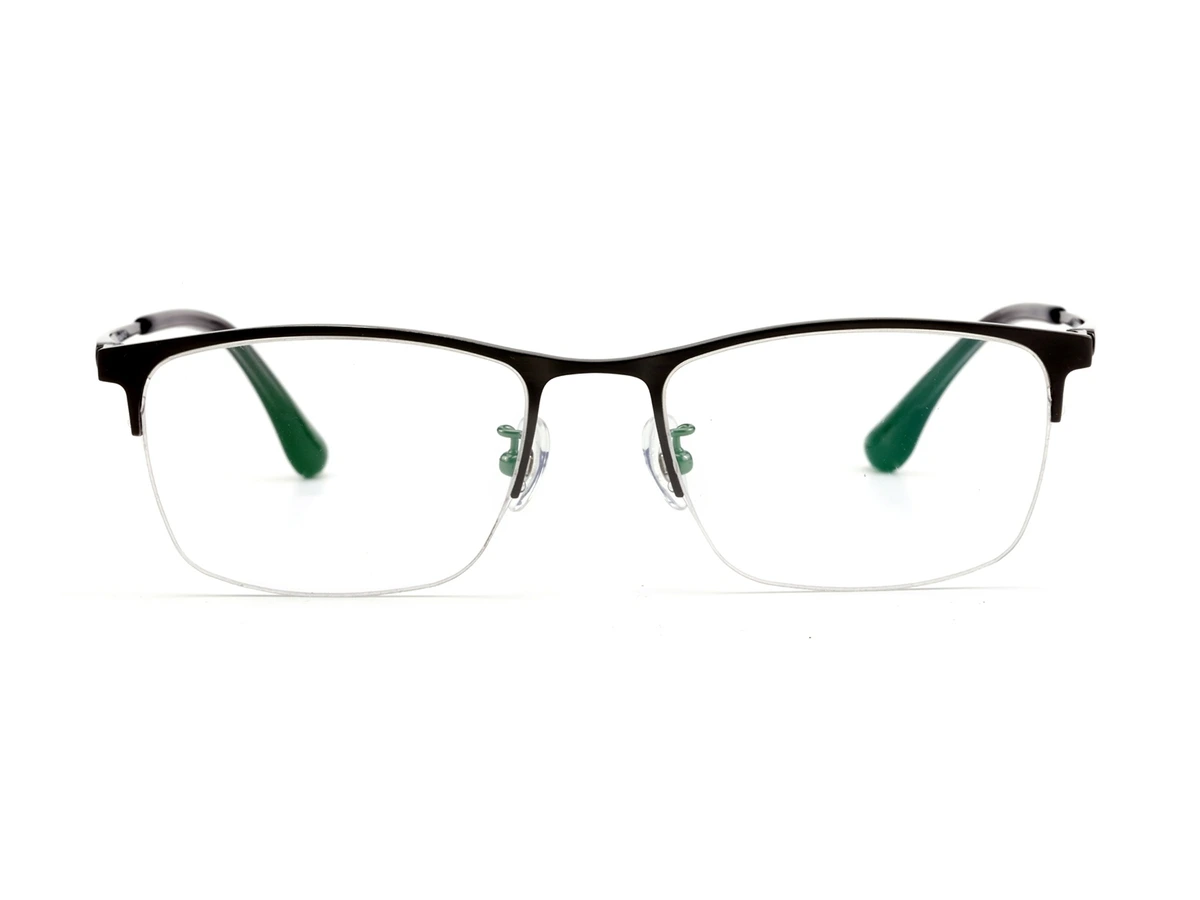
Our published CK0010 titanium frame specification gives a concrete example:
- Lens width: 55 mm.
- Bridge width: 18 mm.
- Temple length: 145 mm.
- Lens height: 39 mm.
- Overall width: 137 mm.
Twice 55 plus 18 equals 128 mm, while the catalog lists 137 mm overall. These are different dimensions. The difference belongs to this model’s catalog example; it is not an allowance to apply to other frames.
Compare wide-fit frames using more than lens width
If your range needs options for wider faces, begin with a reference frame and the fit requirement your retail team has identified. Request overall front width, temple spacing with its measurement method, bridge details and temple length. Review those alongside the lens dimensions.
A larger eye size alone does not establish a wider or more comfortable fit. Endpiece design, the bridge and temple geometry also need review on the actual sample. Likewise, a wide front does not tell you whether the bridge suits an individual wearer.
Treat labels such as small, medium, large, wide and oversized as the supplier’s catalog categories. Ask which measured dimensions define them. Compare those values before combining products from different suppliers under one size label.
For individual fitting, involve the optical professional responsible for the finished glasses. A buying specification can describe the product clearly; it cannot guarantee fit across an entire customer group.
Build one size record for each model variant
Keep a short specification that the buyer and supplier can both check. Include:
- Model number, size variant and color code.
- Lens width, bridge width and temple length in millimeters.
- Lens height and overall width, where confirmed.
- A drawing or photos showing the agreed measurement points.
- Relevant bridge, nose-pad and temple details.
- The sample reference, revision date and approval status.
Leave unconfirmed dimensions as questions in the internal buying record. Do not fill gaps by scaling a product photo: perspective and cropping can make that unreliable.
For an existing style, start with the supplier’s specification and ask which variants are available. For new development, send the reference and target dimensions for feasibility review. Changing size can require a design review; it should not be treated as a simple change to the printed marking.
Agree on measurement methods and acceptance criteria
Before approving production, ask how the supplier will check dimensions against the agreed specification. Record the method and any agreed tolerances. Do not turn a consumer guide’s suggestion that a small size difference may be acceptable into a manufacturing tolerance.
Compare the sample with its own specification and note any discrepancy for resolution. Keep the approved version for repeat orders. The sample-checking guide covers the broader review, including finish, construction and order details.
Choose sizes that fill a documented gap in your range
Once dimensions are clear, decide which variants belong in the order. A second color does not fill a missing size, and a larger-looking lens shape may overlap with a model you already stock.
Use your own sales records, requests and sample reviews to define the gap. Then ask which size and color combinations exist and what order terms apply. The budget assortment guide explains how those combinations affect the buying commitment.
For construction terms, use the frame types guide. If the shortlist includes rimless models, also confirm the lens outline and mounting information described in our rimless buying guide.
Ask for dimensions before choosing quantities
Browse the frame catalog for model references, then request any measurements missing from the listing. Send your preferred model or product link, required dimensions, target market and planned quantity. A reference frame can start the discussion if you do not yet have a drawing.
Request suitable frame options and ask for the specification and sample terms. Confirm the selected size variant before finalizing the order.
Frequently asked questions
Is lens width the same as total frame width?
No. Lens width describes one lens opening. Overall frame width spans the front, including structure outside those openings. Request both values separately.
Will two frames marked with the same size fit identically?
The marking does not capture every dimension or fitting detail. Compare the full specification, bridge and temple design, then review samples.
What size counts as a wide eyeglass frame?
There is no single threshold used in this guide. Ask how the supplier defines its wide category and compare the actual dimensions with your reference and fitting requirement.
Does lens height confirm suitability for progressive lenses?
Lens height is one input. Have the dispensing professional and optical lab assess the chosen lens design, fitting measurements and frame. A catalog height alone does not confirm suitability.